
Additional Nicknames: Why They're Important for OSINT and How to Find Them
When registering on various websites, everyone is free to use any nicknames or full names they like, with rare exceptions where ID verification is required. However, only a small part of people who are genuinely concerned about their privacy come up with a unique nickname or name for each website. Far more often, people use several nicknames or names, as they are too lazy to come up with and somehow remember or write down a large amount of different information.
It is quite common for a person to have just 2 or 3 usernames.
The first is for work and formal communication. For example, johnsmith or asleywhite. It is used on Facebook, LinkedIn and job-search websites; the first part of a Gmail address or an email address on the domain of the person’s employer may match this username.
A second username is used for various entertainment websites such as online games, hobby forums, fitness apps and social media platforms that people use purely for entertainment (TikTok, Instagram).
Some people also have a secret nickname for their ‘dark side’. Some use it for adult-only websites, whilst others use it to register anonymous or fake social media accounts from which they engage in hate speech and trolling. And some even use it for fraud or other criminal activities.
Naturally, a person may have several nicknames in each category. For example, there is only one ‘work’ nickname for official communication. There may be one nickname in the second category for each type of hobby. For example, ‘john-artist’ for websites selling photographs and ‘fisher-johny’ for fishing and hiking.
A single person is likely to have the most third-category nicknames, as when registering accounts, they want to ensure that no one can identify them or link their ‘dark side’ to their other profiles.
Finding a user’s additional nicknames is one of the most crucial parts of an investigation. This is because it sometimes happens that the initial nickname (the starting point for the investigation) leads to just one or two social media profiles, whereas a random additional nickname can lead to dozens more (with a lot of person’s face photos and other personal details).
Here are a few of the simplest, most basic ways to search for a user’s additional usernames using their main username.
An important reminder
It is very common for several people to use the same username, no matter how original it may be. And sometimes these may be people who look similar, are the same age and live in the same town (I’ve come across this on more than one occasion).
Therefore, always bear in mind that attributing a profile to a specific person based solely on their username is always hypothetical, speculative and always requires further verification.
Username search
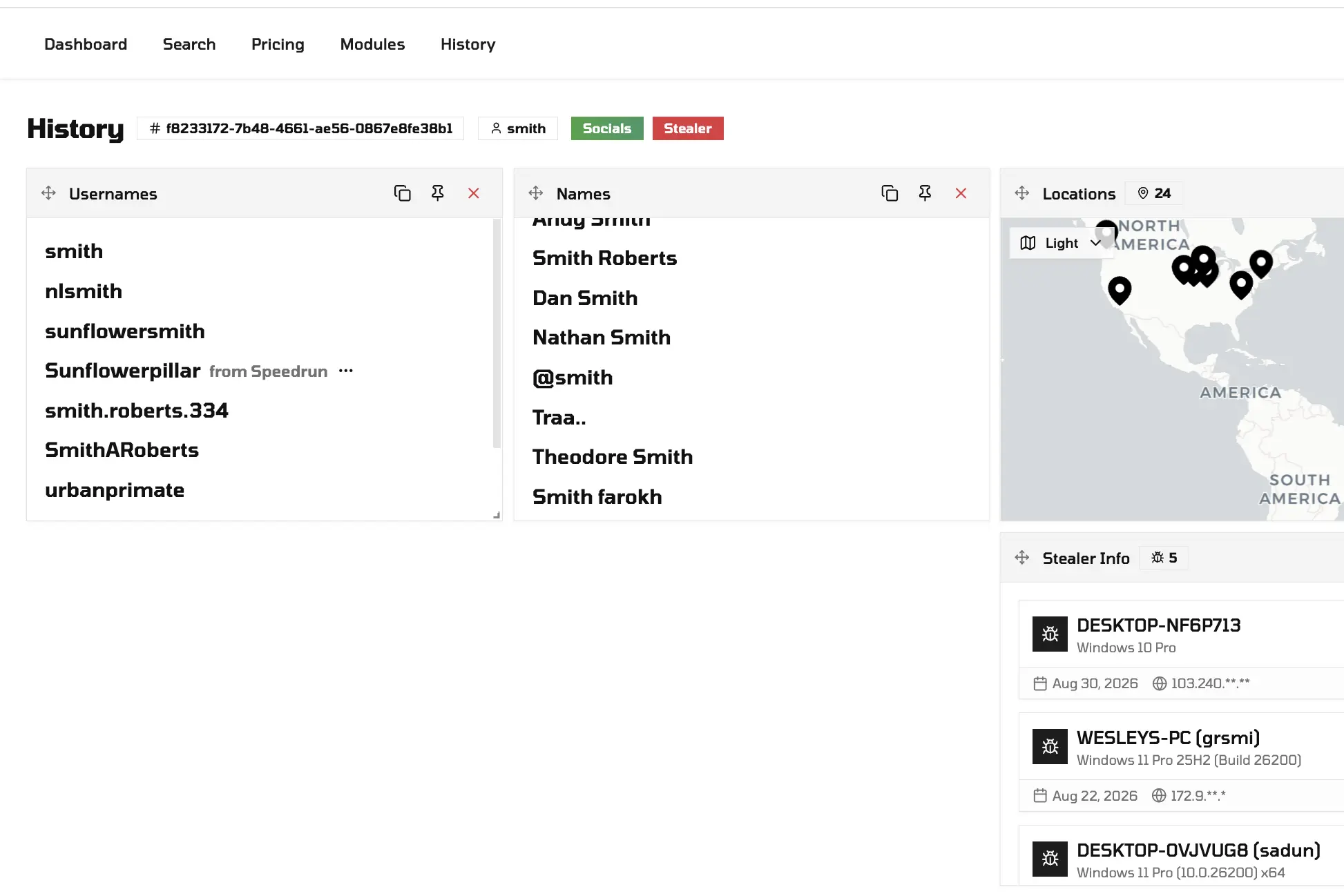
First of all, carry out a simple username search on Noimosiny. The tool will automatically generate a list of all other usernames used in profiles found based on the original nickname.
Search by email
Try searching for accounts registered with email addresses in the format “nickname”+”gmail.com”, “nickname”+”outlook.com” or “nickname”+”yahoo.com”.
You can also use email service domains that are popular in the target person’s country, or the domains of companies where the person has worked, if these are known.
Search by avatar
Search for all avatars found for a user on search engines that support reverse image search, such as Google, Yandex, Bing, Lenso.io, PimEye and others. If your search relates to China, don’t forget to check Baidu.
Please note that Noimosiny generates links for a quick reverse image search for each avatar found.
WHOIS
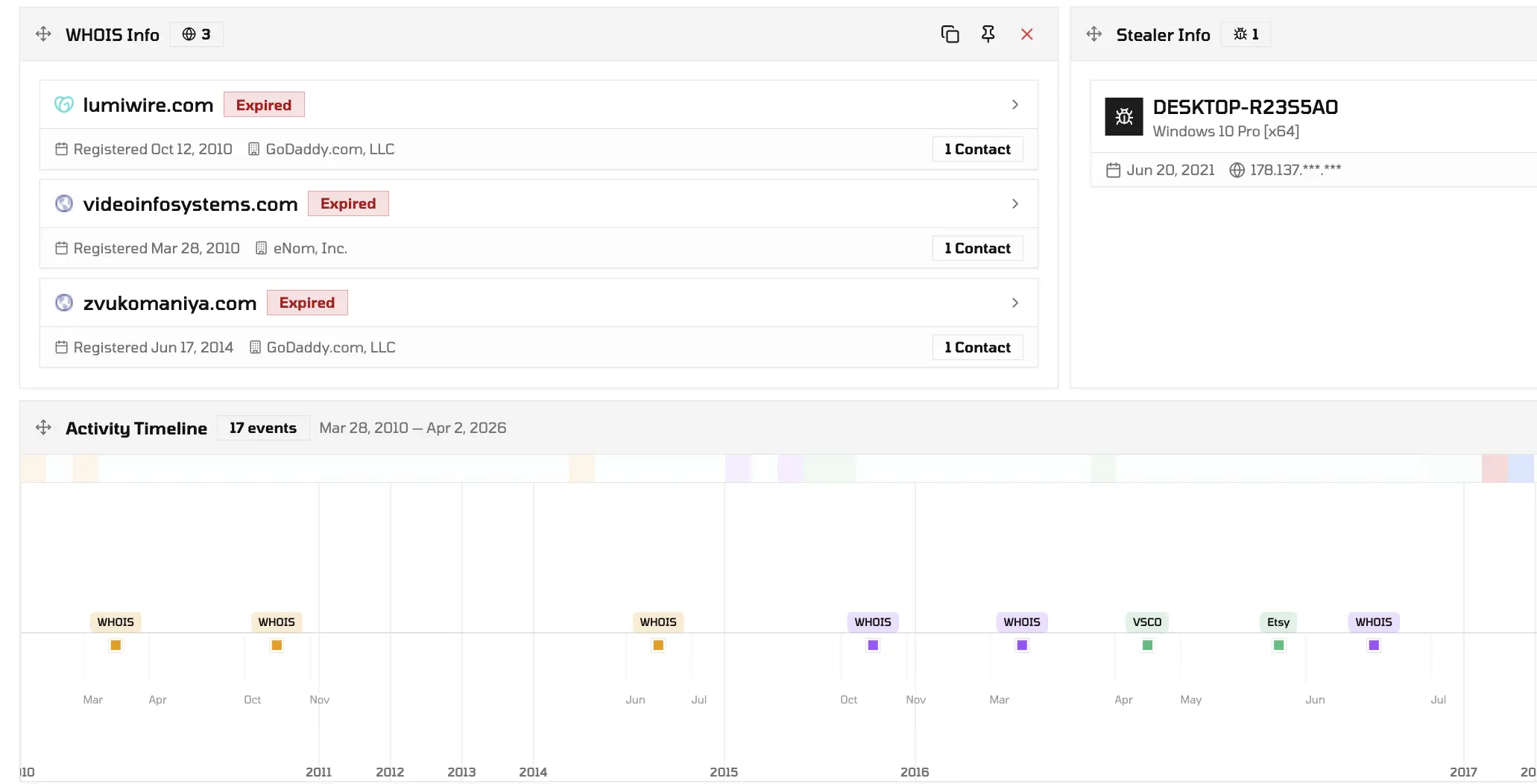
Take a look at every domain where the target’s email address was used to register. You may find links to the person’s various social media profiles, email addresses listed in the contact details section, or mentions of their nicknames in the text (“Hi, I’m john-fisher. This is my first website”).
I recommend checking not only the current version of the website, but also archived versions. Sometimes, many years ago, a person may have posted information about themselves on a website at some point, but later decided to hide it (but that was pointless, as they had already been preserved on the Wayback Machine, Troove and other web archives).
Searching for links to websites and profiles
Try copying the text into the Google search bar and searching for links to the person’s profiles. Sometimes this can help you find a user’s personal websites - where they may have used an email address you are not yet aware of when registering the domains - or profiles on various services that list different contact details.
Start with links to the most popular social media platforms such as Facebook, LinkedIn or X.
Search by full names
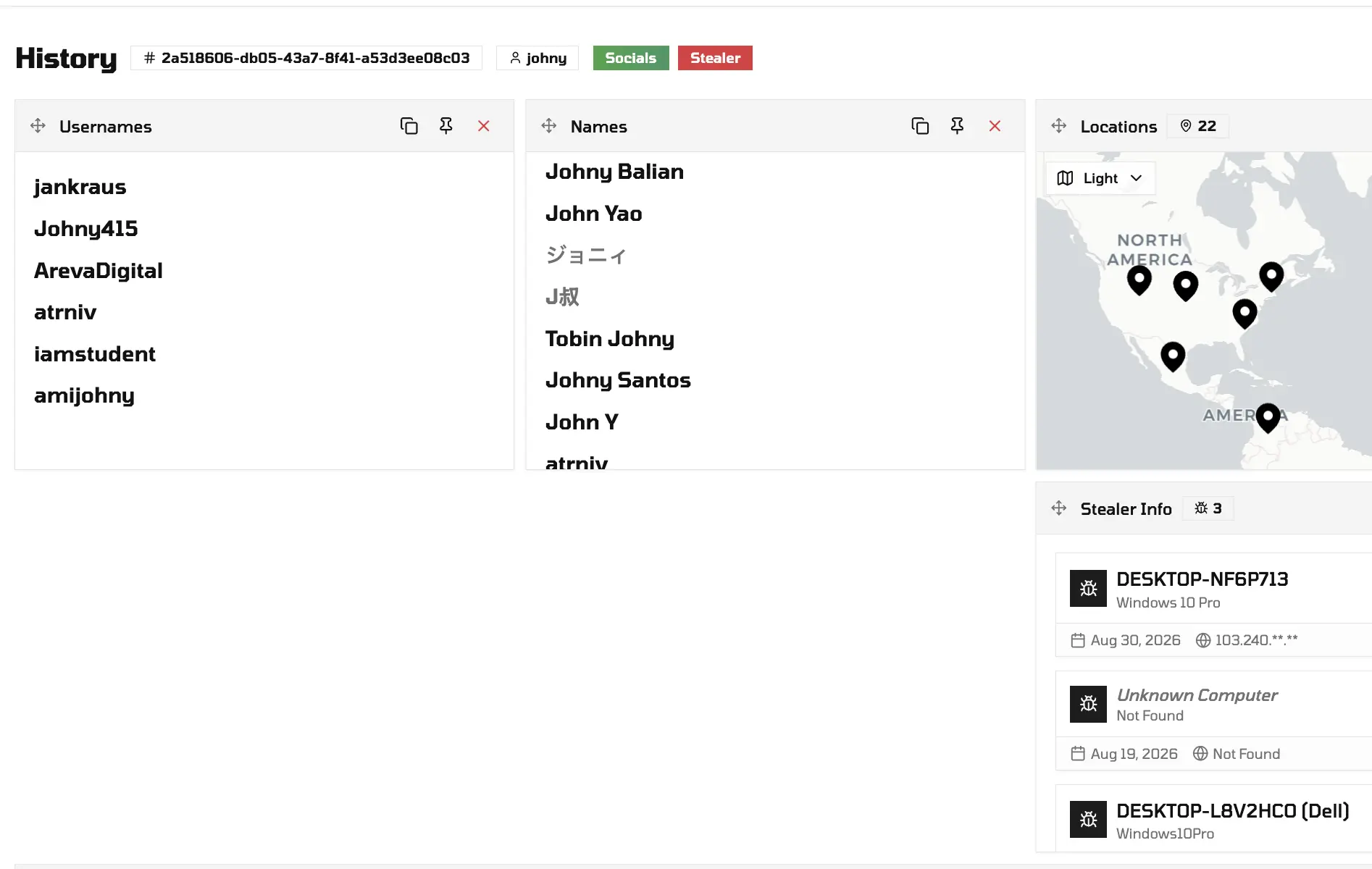
Try searching on Google for the first names and surnames listed in the profiles found via a nickname, email address or phone number (Noimosiny collects these automatically).
When trying out different options, bear in mind that people do not always use their full names. For example, John might call himself Johny or Jon. Also, surnames can have abbreviated forms (usually the first 1 or 3 letters).
Methods for when nothing else works
Profiles on hobby websites, fitness apps, streaming services and professional communities contain a wealth of personal details that can be used as a starting point for an investigation or to test hypotheses. Here are a couple of examples.
Some local social networks allow you to search for people by town and age (for example, the old Russian social network ok.ru), and sometimes even by exact date of birth. And this information is often included in profiles on professional or hobby forums. And going through the profiles of all 20-year-old men in a small town to see if any match the photo could well be a feasible task (especially with the help of AI).
You could also try gathering information about the user’s close friends. For example, those they’ve added as friends or followed on several different sites. On other people’s profiles, the target user may also be listed as a friend or follower, but under a different name (though with the same avatar, photo or age).
In short, look through everything carefully and don’t overlook a single detail.
Conclusion
When searching for additional nicknames, bear in mind that an investigation is a cyclical process. Every new profile, full name, email address or piece of personal information can serve as a starting point from which to begin all over again and re-examine all previously identified hypotheses. And don’t forget that the use of the same nickname across several profiles may simply be a coincidence.