Country specific OSINT with Google and other search engines
Our Twitter and Telegram communities regularly post about how different Noimosiny search modules can be used to estimate which country or city someone was or still is in, based on their username, phone number or email address.
Knowing this biographical detail opens up many additional avenues for investigation. Even a basic Google search for someone’s first and last name can become far more effective if you add a few details to your search queries that point to a particular country. That’s what we’ll be discussing in this article.
As a reminder, we’ve already discussed the basic techniques for finding someone on Google in this article:
5 tricks for searching for information by full name on Google
Search by country domain
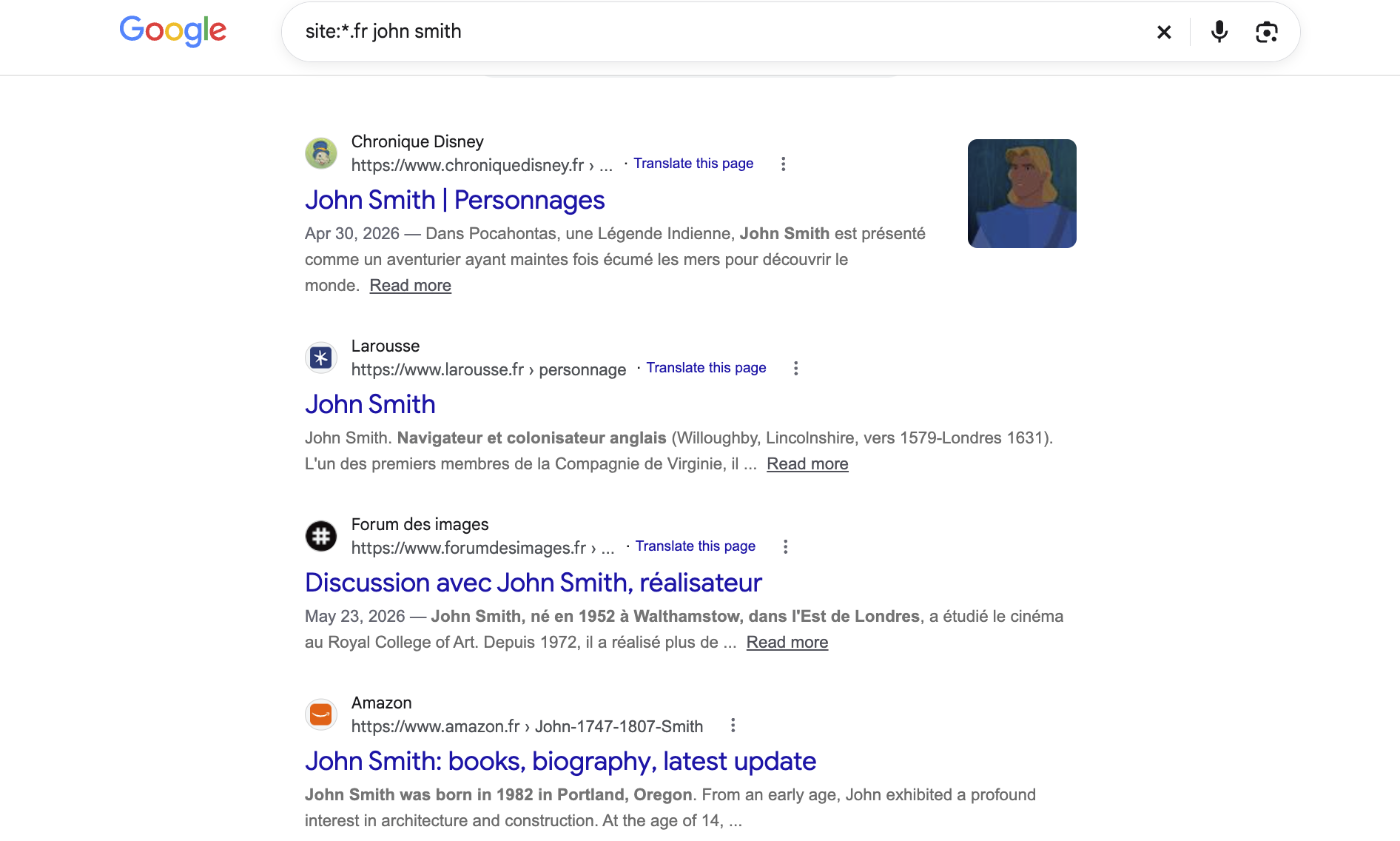
Let’s start with the simplest and most obvious option: using the “site:” advanced search operator to filter search results to sites on a particular country-code top-level domain:
site:*.fr
It’s important to remember that large countries often have more than one top-level domain. For example, in addition to .us, the USA also has .gov, .mil and .edu. South Africa has not only .za, but also .africa.
You can find an up-to-date list of top-level domains here:
IANA Official Top Level Domain List
If you have an idea which city your subject of investigation is in, and it’s a very large city, check whether it has a city-specific TLD (.nyc, .capetown, .okinawa, .vegas, .london, etc.).
National subdomains
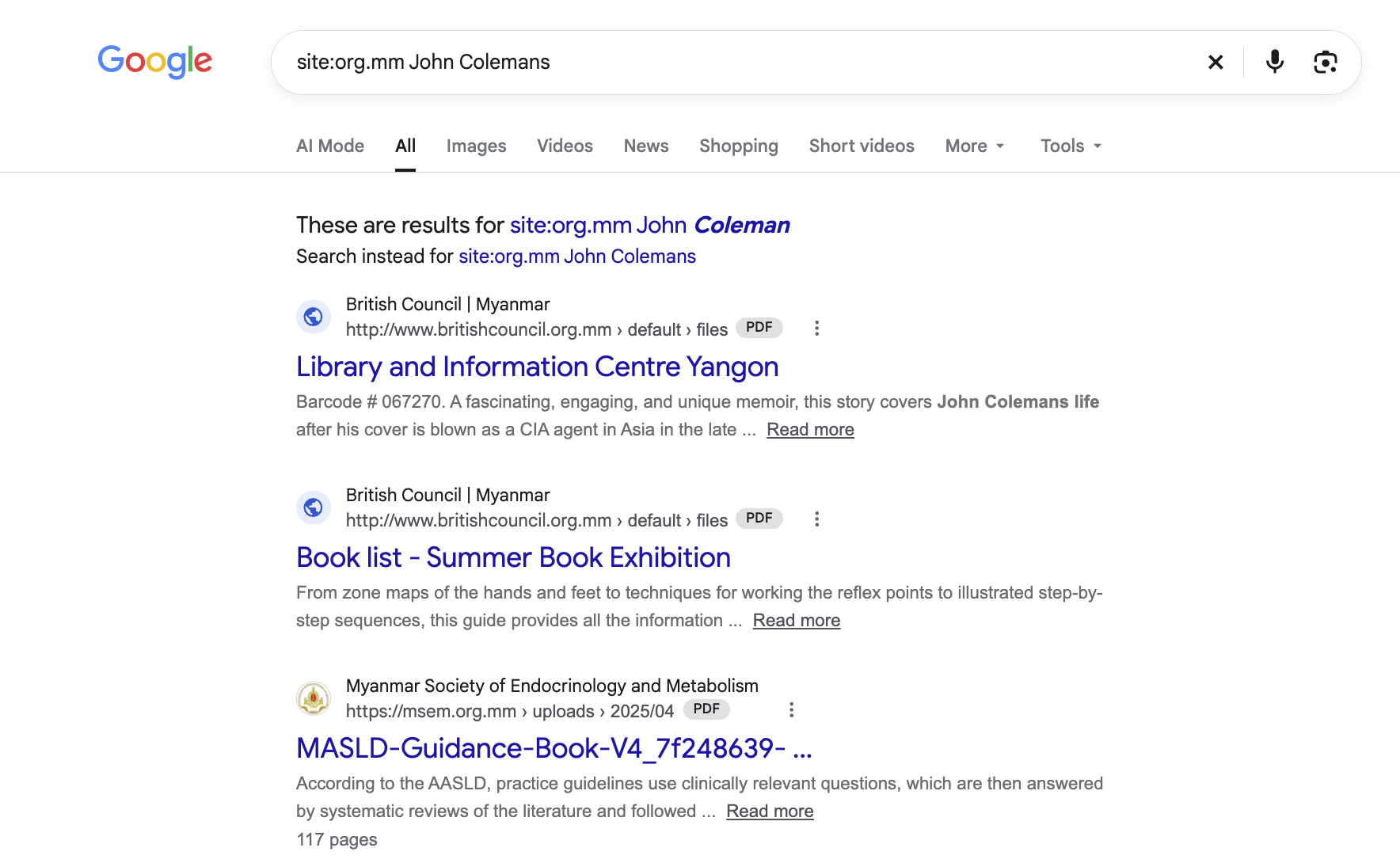
When searching for someone by surname, we recommend paying particular attention to searches on country-specific service subdomains used by websites belonging to large organisations or government agencies. Here are a couple of examples for Myanmar:
site:*.org.mm
site:*.gov.mm
Try spelling the name using different alphabets
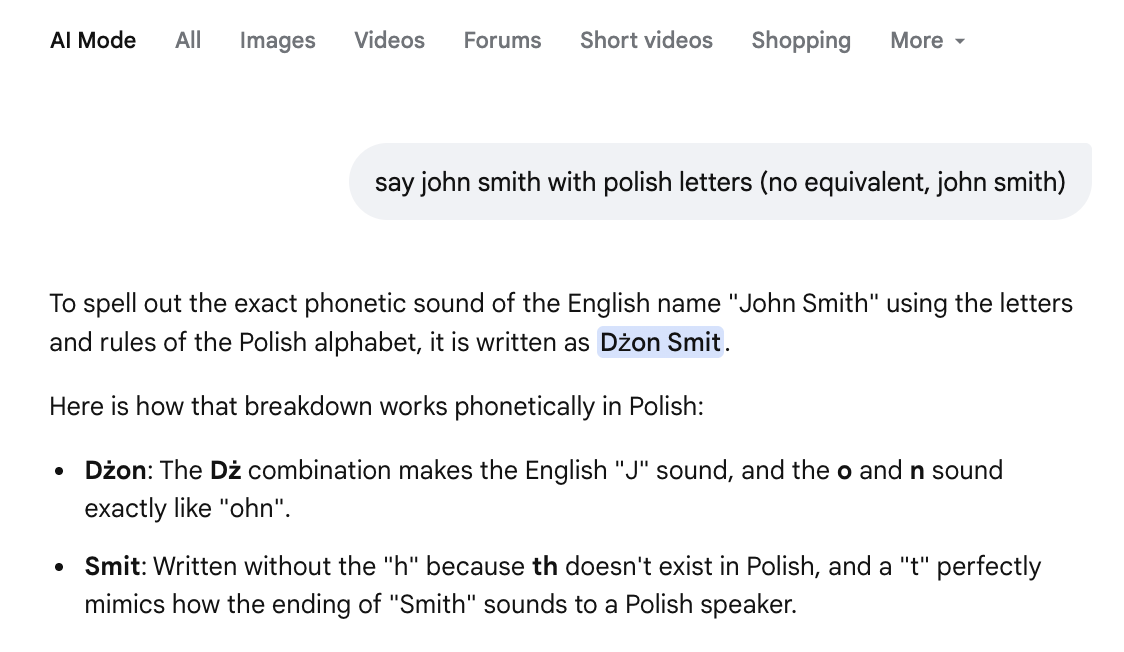
When searching websites in a particular country, use the alphabet of the languages spoken in that country. You can always ask AI to transliterate a name from the Latin alphabet into another writing system. Just remember that AI can make mistakes, and try different variants.
Also translate keywords when searching for a particular type of information. For example, use “adres” (in Polish) instead of “address”, and “telefon” instead of “phone”.
“Translit” (Don’t confuse it with “translate”)
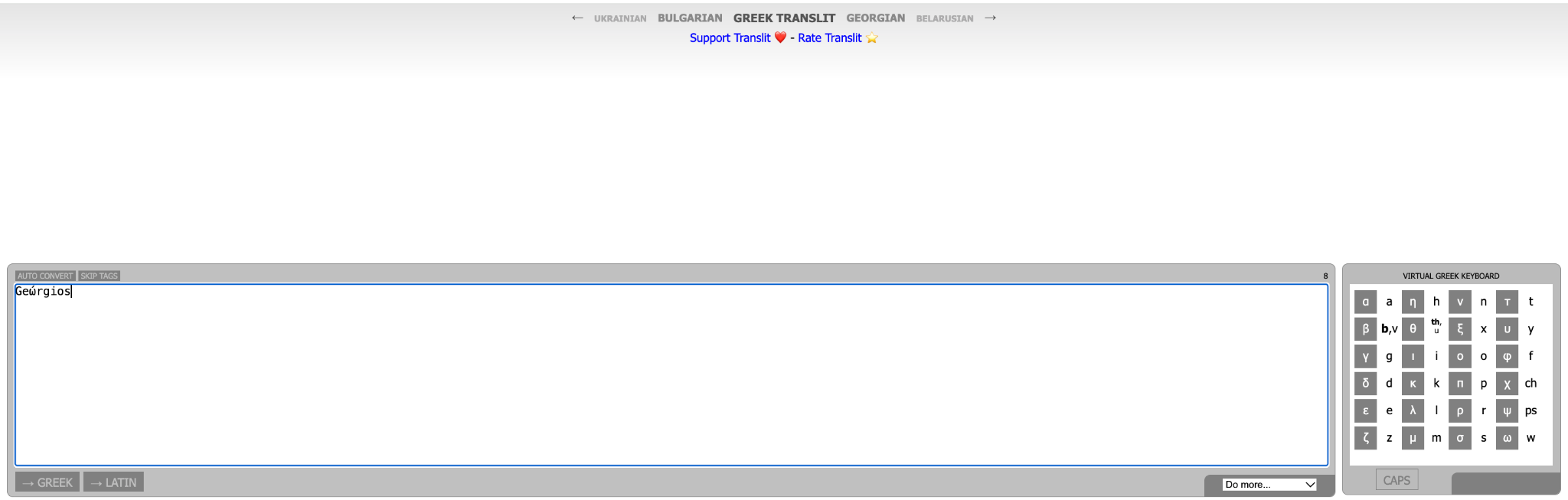
If, on the other hand, you know how someone’s name is written in their native language but want to search for mentions of it in web page URLs using the inurl operator, it can be useful for some languages (Greek, Bulgarian, Georgian, Armenian, etc.) to search for translit spellings of names (an informal way of representing the letters of one alphabet using the letters of another). You can generate them using a special online tool.
Bear in mind that translit has no fixed rules, so it’s worth trying different variants when searching. For example, the name Victor might be written as Wictor, Wiktor or Viktor.
Searching global social networks and messaging apps
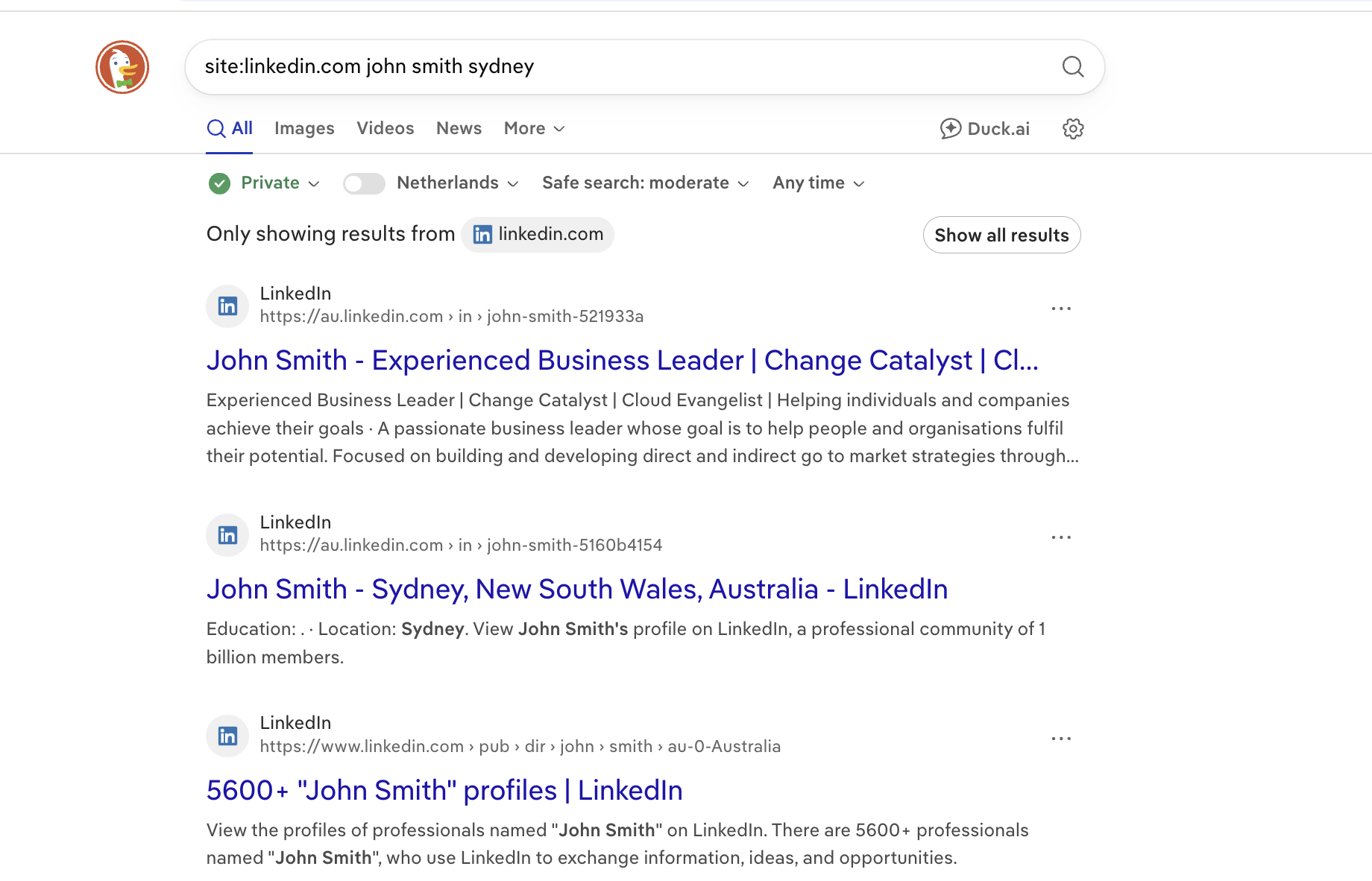
When using the “site:” operator to search popular social media platforms around the world, such as Facebook, LinkedIn, Instagram and X, try adding the name of a country or city to your search. This can sometimes be very helpful when looking for people with common names.
Also try using alternative names and nicknames for cities and countries. For example, someone from New York might say on social media that they live in the Big Apple. People in South Africa might write something like, "I’m planning to return to ZA at the end of the month."
Search across national social networks and messaging apps
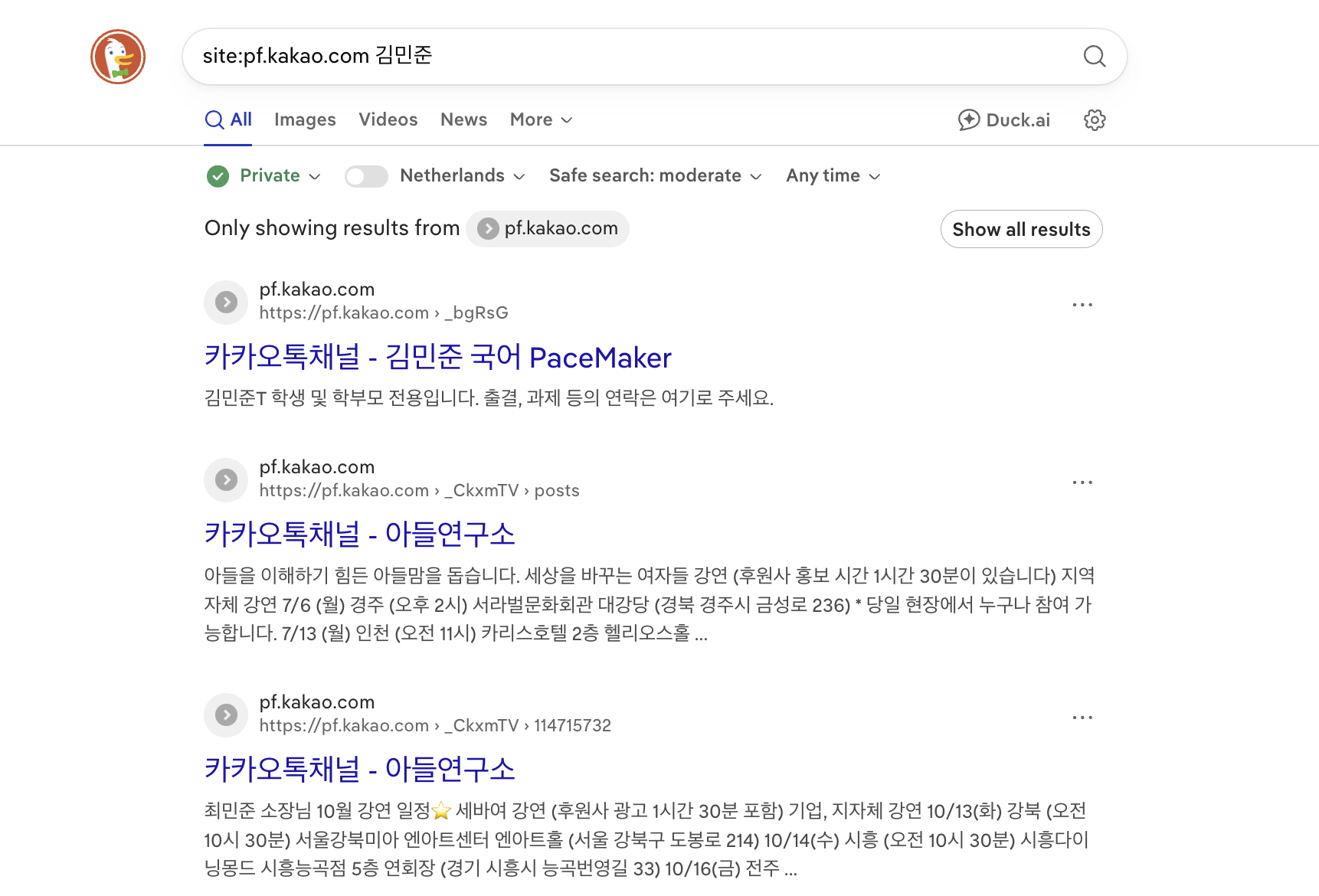
Most people around the world prefer global messaging apps and social networks. But in some countries, people prefer their own national platforms. For example, tens of millions of people in South Korea use KakaoTalk every day. So, when gathering information about Koreans, you should also search for mentions of them on this platform:
site:pf.kakao.com 김민준
Japanese people should be searched for on LINE, Vietnamese people on Zalo, Iranians on Rubika, and Russians on VK.
Local search engines
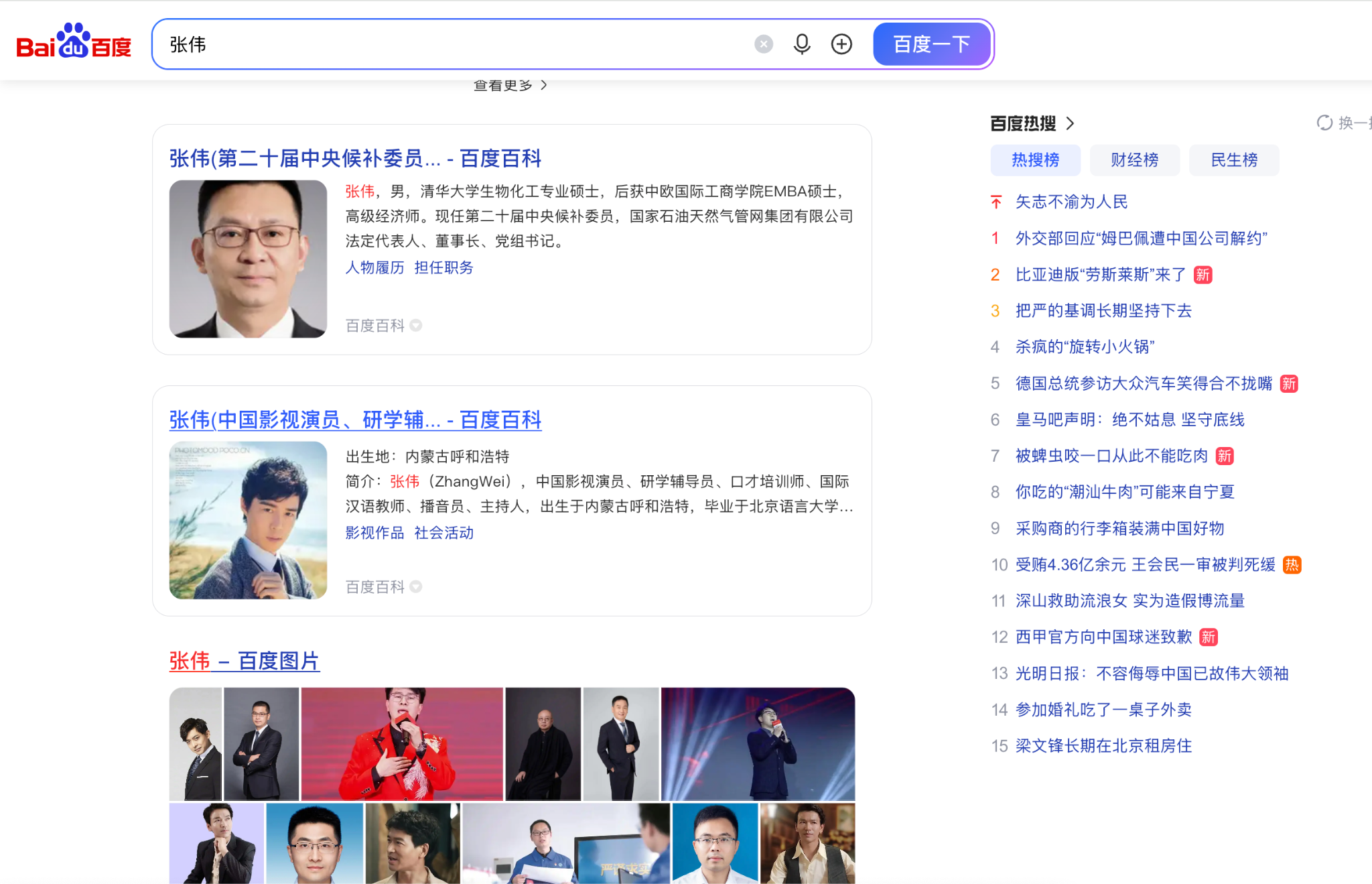
It’s also worth checking whether the country has a search engine that local people use extensively and that indexes local content particularly well. For example, Baidu and Sogou in China, Naver and Daum in South Korea, and Seznam in the Czech Republic.
It’s best to check the country’s technological profile individually for each investigation.
Searching government registers
One of the most important resources for finding information about a person is the range of government registers: company registers, registers of births, deaths and marriages, property and land registers, registers of licensed professionals, and others.
The search function on these websites often doesn’t work very well. For example, to run a search, it may require you to enter information you don’t know, such as a date of birth. If you don’t have enough information, you could try checking whether the register’s records have been indexed by Google or other search engines.
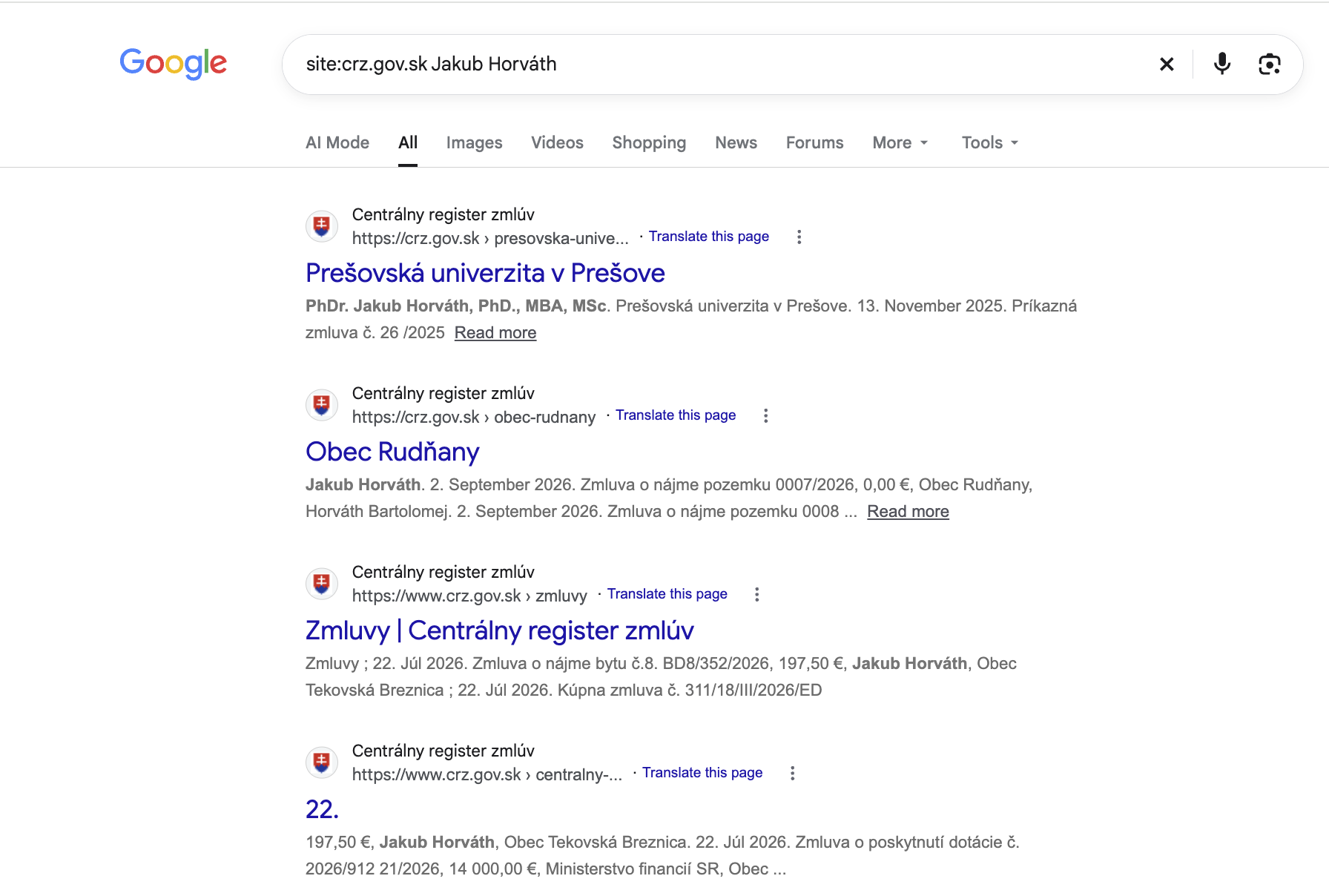
Here’s an example of a search by first and last name in Slovakia’s public register of contracts:
site:crz.gov.sk Jakub Horváth
You can find a huge number of government registers from countries around the world in specialist directories:
OSINT for countries UNISHKA’s OSINT World Series OSINT for countries V2.0
Conclusion
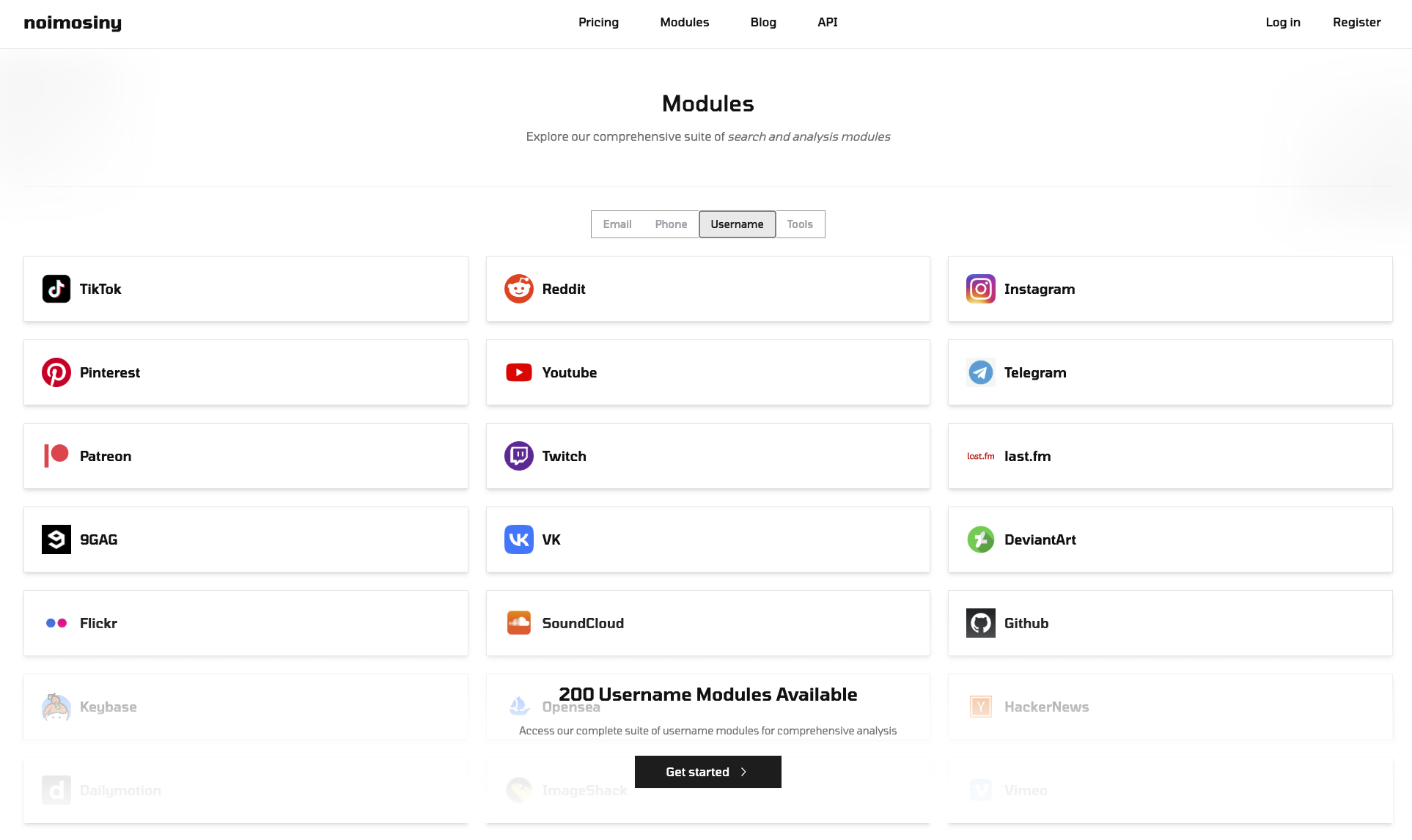
In this article, we’ve covered the simplest and most basic ways to find someone in a particular country using search engines. We’d also like to remind you that Noimosiny Search has a range of modules to help you find profiles on country-specific websites: DailyMotion (France), Aparat (Iran), Douban (China), 7dach (Russia), Eksisozluk (Turkey) and many others.