
Not just GitHub: how technical sites can be useful for OSINT
Various services for searching for information by username can find a person's profiles on hundreds of different sites. For example, Noimosiny username search contains over 200+ modules. How do you choose which ones to analyse first for an investigation in order to save your time and/or AI agent tokens?
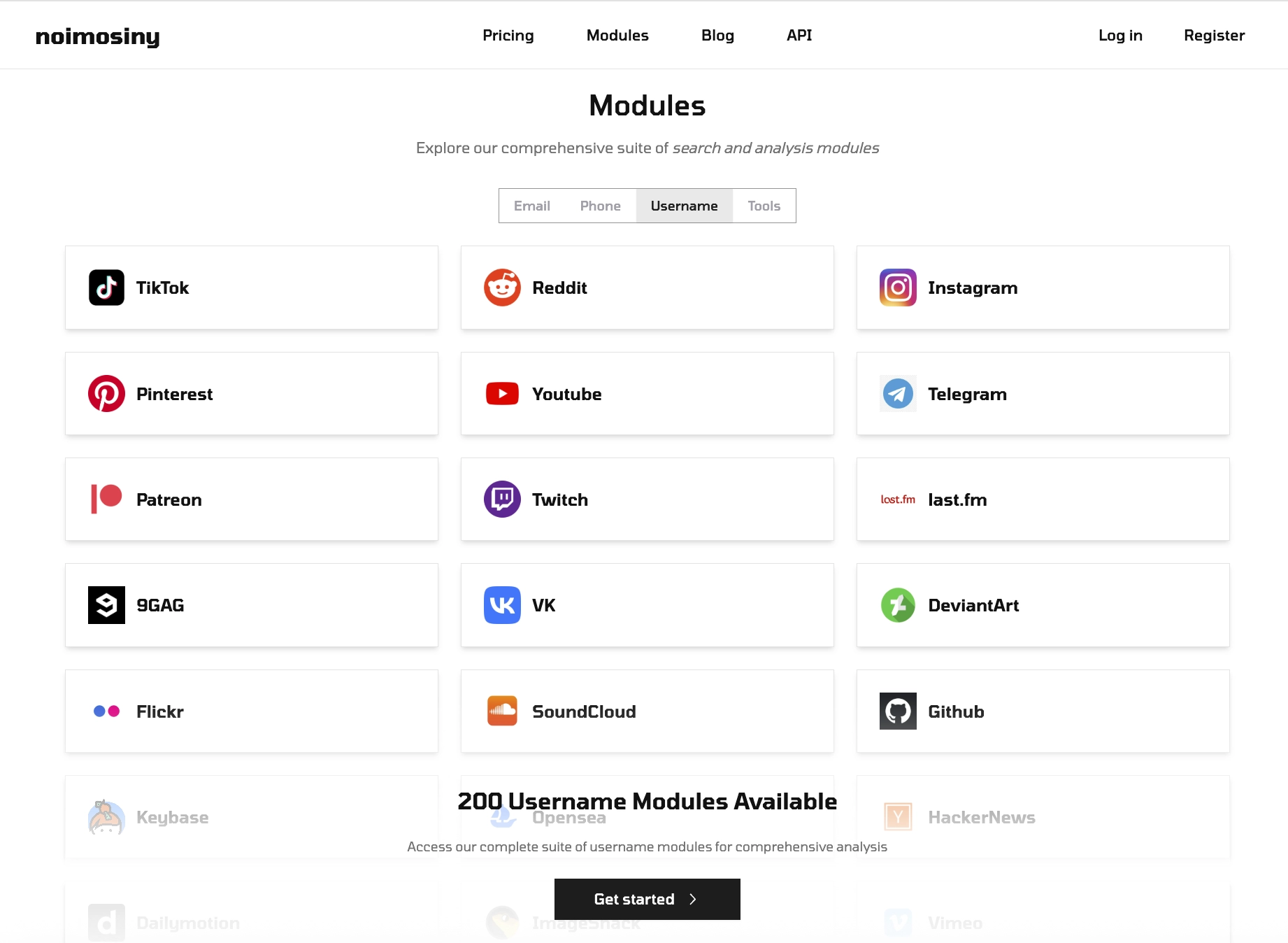
There is no straightforward answer to this question. Sometimes it happens that Facebook and LinkedIn profiles (where investigations usually begin) contain a huge amount of information. And sometimes, there are only a couple of leads, like an avatar and a name with the first letter of a surname on a small local forum account that the person registered ten years ago. Every case is unique.
But in my opinion, one of the categories that is worth paying attention to first and foremost is developer sites, where people publish their work, study or hobby projects, as well as learn and discuss solutions to various technical problems.
Firstly, information about a person's profession skills is often found there, which can be used as search filters on LinkedIn or as keywords when searching on Facebook. This is useful if you have to look for a person with a very popular full name like David Smith.
Secondly, projects posted in the public domain may contain references to their place of study or work. For example, a script for using a niche API on the domain of the company where they work might be posted there. Or a solution to a computer science lab assignment with information about a specific university.
Thirdly, like sites in other categories, technical sites can contain standard "entry points" that are useful for gathering additional information: avatars, facial photos, location, links to a personal website and to profiles on other sites.
Here are a few examples of popular technical sites, the profiles on which can sometimes contain a wealth of information useful for an investigation. However, they can also be completely empty; it’s the luck of the draw.
Modules for all these sites are included in Noimosiny username search.
Coderwall
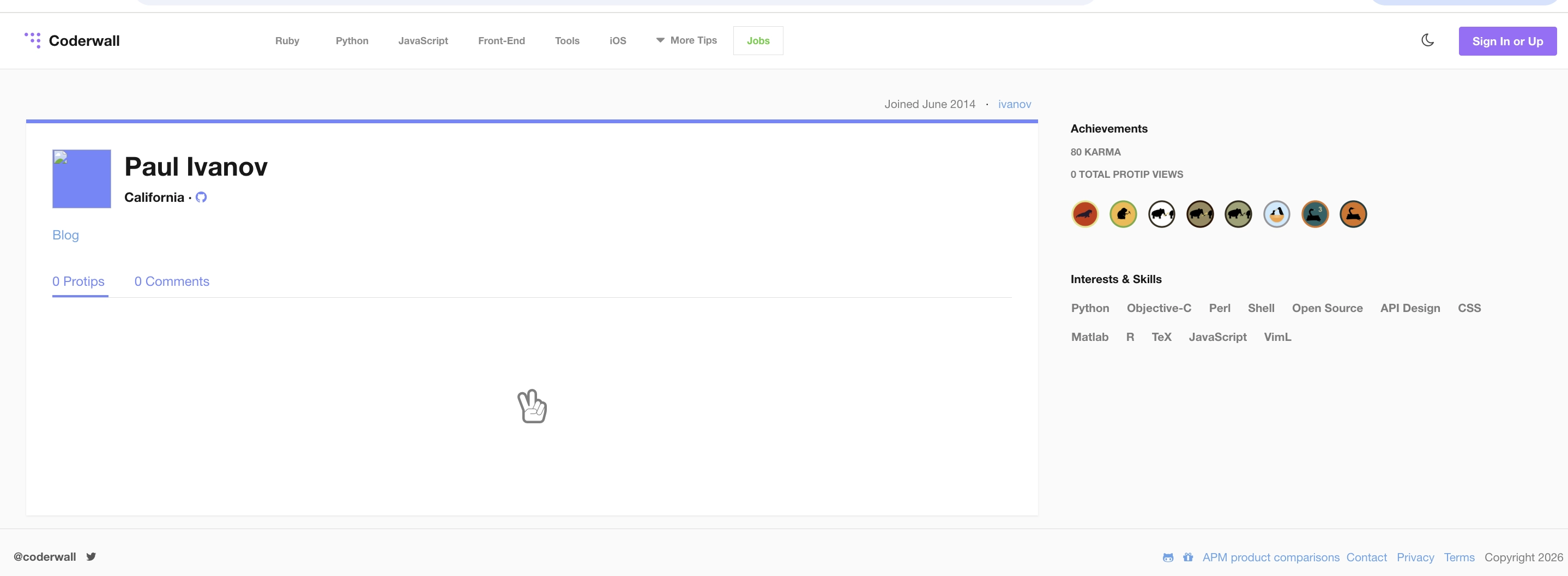
A collaborative learning platform for developers where they can showcase their achievements.
In the profile, you can find an avatar, country, a link to GitHub, public comments, as well as interests and skills.
Leetcode
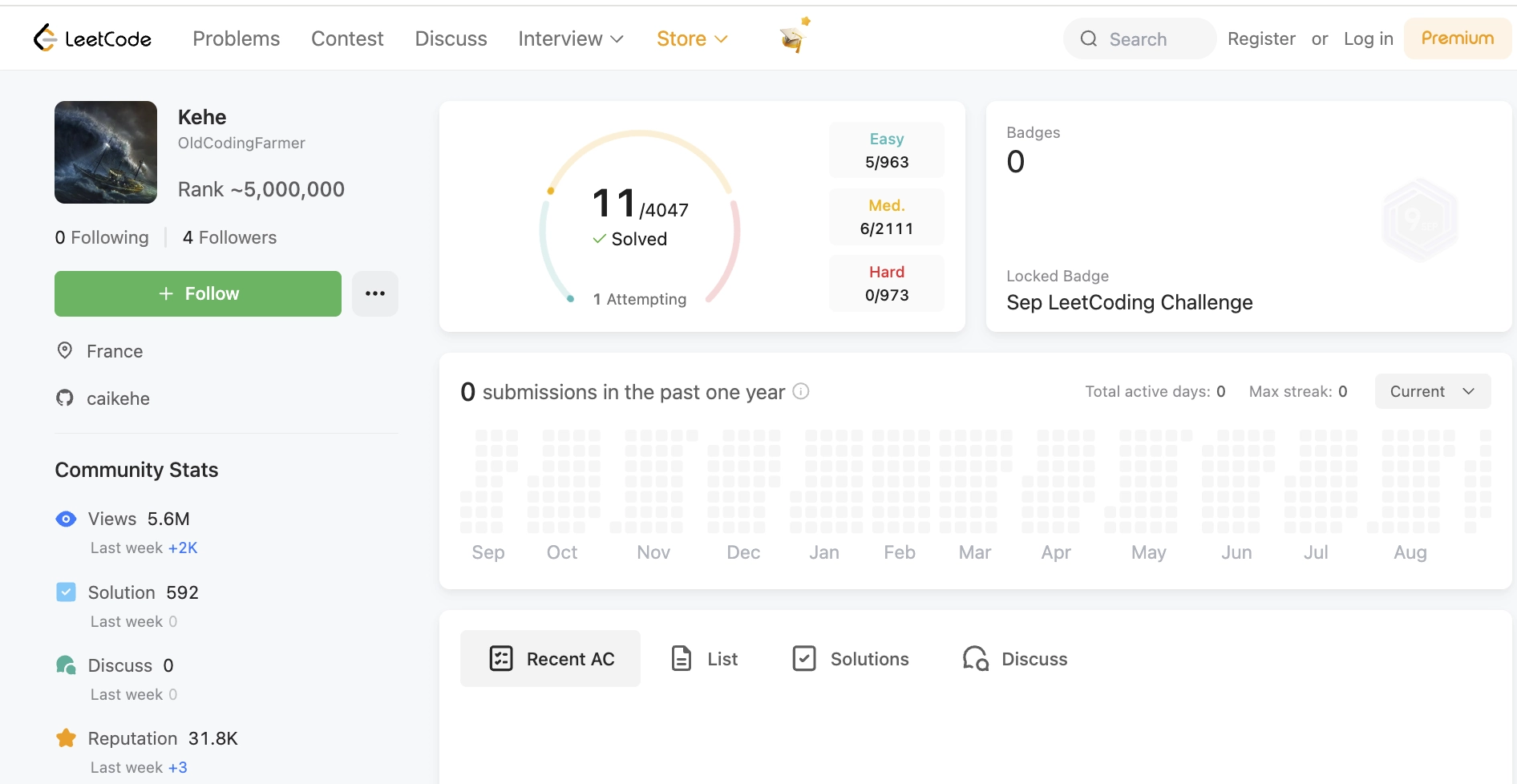
An online platform for practising programming skills and preparing for interviews.
A profile can include country, professional skills, comments in public discussions, a link to a GitHub profile, subscriptions, and followers.
Examples of profiles can be viewed in the user rankings at this site
Docker Hub
This is a large library of projects in the form of Docker containers, where anyone can host their own project.
Profiles can contain country, website, avatar, and source code for projects.
Replit
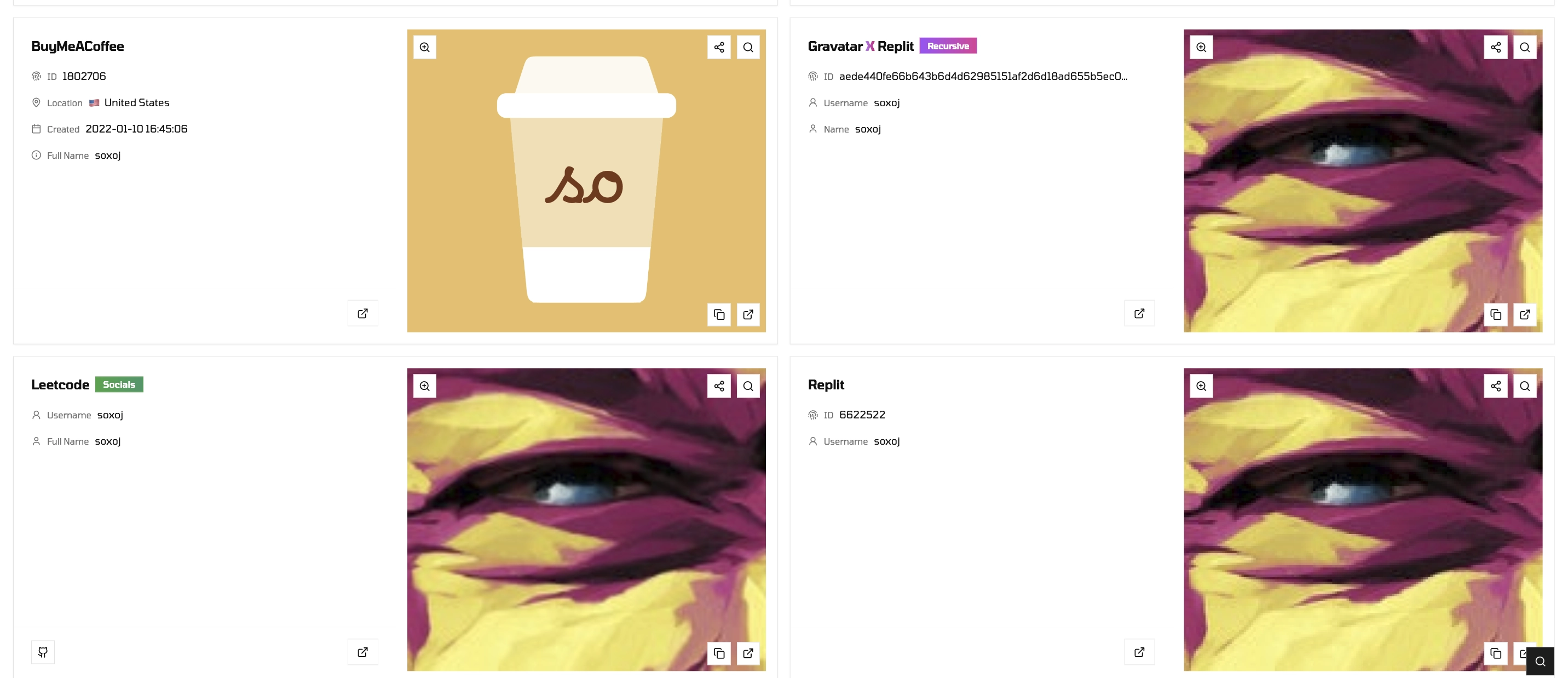
A cloud-based development environment, as well as a platform for publishing web applications.
Avatar, full name, location, and links to public applications.
By the way, Noimosiny can find Replit profiles not only by nickname, but also by avatar using Gravatar Recursive Search. This feature allows you to find profiles on 7 different platforms using an avatar.
Github
The most popular site for developers in the world, with over 200 million users.
An avatar, location, links to a personal website and profiles on other social networks, full name, names and source code of personal projects, organisations and companies the user is associated with, followers and sponsors… It has everything!
Active developers may also have a completed README file with a detailed biography and CV. GitHub often turns out to be the most valuable of all technical platforms in terms of the quantity and reliability of information, as it is standard practice to include a link to it when job hunting.
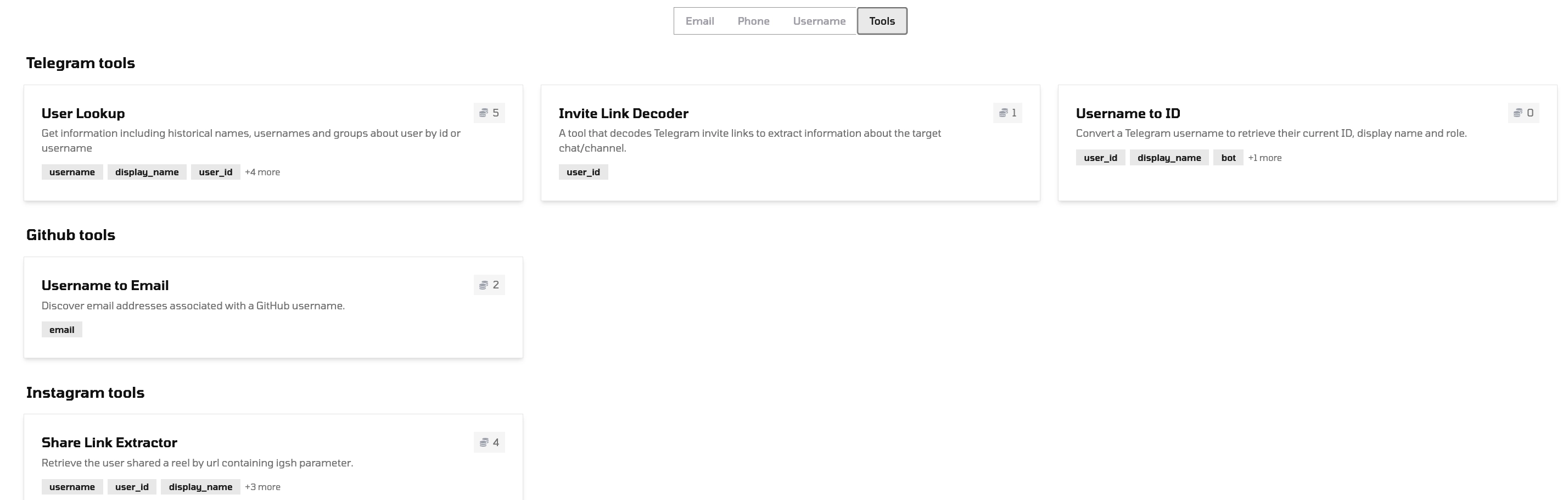
Furthermore, in repository commits, you can find a user's email addresses (which are used to receive responses to commits and are specified in the settings). These can be found through long manual review or by using a special tool from Noimosiny.
If you manage to find an email address via a GitHub profile, don't forget to run a Noimosiny email search on it; this might find other user profiles on different sites (including additional GitHub profiles). Then try to find email addresses from those again. Sometimes, this can result in a long investigative chain that helps to find additional email addresses and nicknames for the person.
How can a person's personal projects be useful for OSINT?
As you can see, on many sites mentioned in this article you can view the source code of personal projects that a person has worked on or is currently working on. A superficial review of them allows you to get a general idea of their activities and interests.
And a deep analysis of the code (this is where AI will come in handy) can help find domains that may be registered to the user or their company. Investigating their WHOIS data and the HTML files and documents hosted on them can reveal a huge amount of potentially useful information for an investigation.
In addition, if a project is even slightly well-known (for example, it has thousands of stars on GitHub), you can simply Google its name and see what information about its developers is in the public domain (interviews, biographies, etc.).
Conclusion
This article provides only a few examples of major developer sites to show how technical sites can be useful for OSINT in general. But there are a huge number of similar sites in the world (the highly specialised Linux forums alone are worth mentioning), and on any of them, a person might suddenly turn out to be very active and post a lot of information about themselves.
If you assume that the subject of your investigation works in the IT sector, do not overlook universal public discussion sites that are also used for technical discussions (Quora or Disqus).
And, of course, as with any search by nickname, do not forget that many people use several of them. You can read more about how to find them in the article Additional Nicknames: Why They're Important for OSINT and How to Find Them.